Tyson and Billy Architects
3Jan/130

Cradle to Cradle: one book you NEED to read!!!

My last blog entry left you with a teaser about one of my favorite books, It’s called Cradle to Cradle and it was written by Architect William McDonough and Chemist Michael Braungart. Right away when you open the book you realize something is a little off about the book itself.. Its not made of paper at all, it’s a plastic material that is infinitely recyclable as a book, the ink is non-toxic and also recyclable. Not to mention its waterproof so you can read in the pool!  The physical format of the book lends itself to the books message. We need to rethink the way we make things!


800px-Biological_and_technical_nutrients_(C2C)

Reduce, reuse, recycle," urge environmentalists; in other words, do more with less in order to minimize damage. But as William McDonough and Michael Braungart argue in their book, this approach only perpetuates a one-way, "cradle to grave" manufacturing model that dates to the Industrial Revolution and casts off as much as 90 percent of the materials it uses as waste, much of it toxic.

Why not challenge the notion that human industry must inevitably damage the natural world? they ask. In fact, why not take nature itself as our model? A tree produces thousands of blossoms in order to create another tree, yet we do not consider its abundance wasteful but safe, beautiful, and highly effective; hence, "waste equals food" is the first principle the book sets forth.

mcdonough-wsj


In the cradle to cradle model, all materials used in industrial or commercial processes—such as metals, fibers, dyes—fall into one of two categories: "technical" or "biological" nutrients. Technical nutrients are strictly limited to non-toxic, non-harmful synthetic materials that have no negative effects on the natural environment; they can be used in continuous cycles as the same product without losing their integrity or quality. In this manner these materials can be used over and over again instead of being "downcycled" into lesser products, ultimately becoming waste.

Biological Nutrients are organic materials that, once used, can be disposed of in any natural environment and decompose into the soil, providing food for small life forms without affecting the natural environment. This is dependent on the ecology of the region; for example, organic material from one country or landmass may be harmful to the ecology of another country or landmass.

800px-The_Change_in_Sustainability_Framework

Follow the link below to a great synopsis of the book (though I highly recommend finding it at the library or ordering it on amazon)

http://www.bluehaired.com/corner/wp-content/uploads/2009/12/Cradle-to-Cradle-in-a-nutshell-Bram-van-der-Grinten-2008.pdf

Hope you enjoyed learning about one of my absolute favorite books, I hope you get the opportunity to pick it up and read what it is all about.

-Carl


20Dec/120

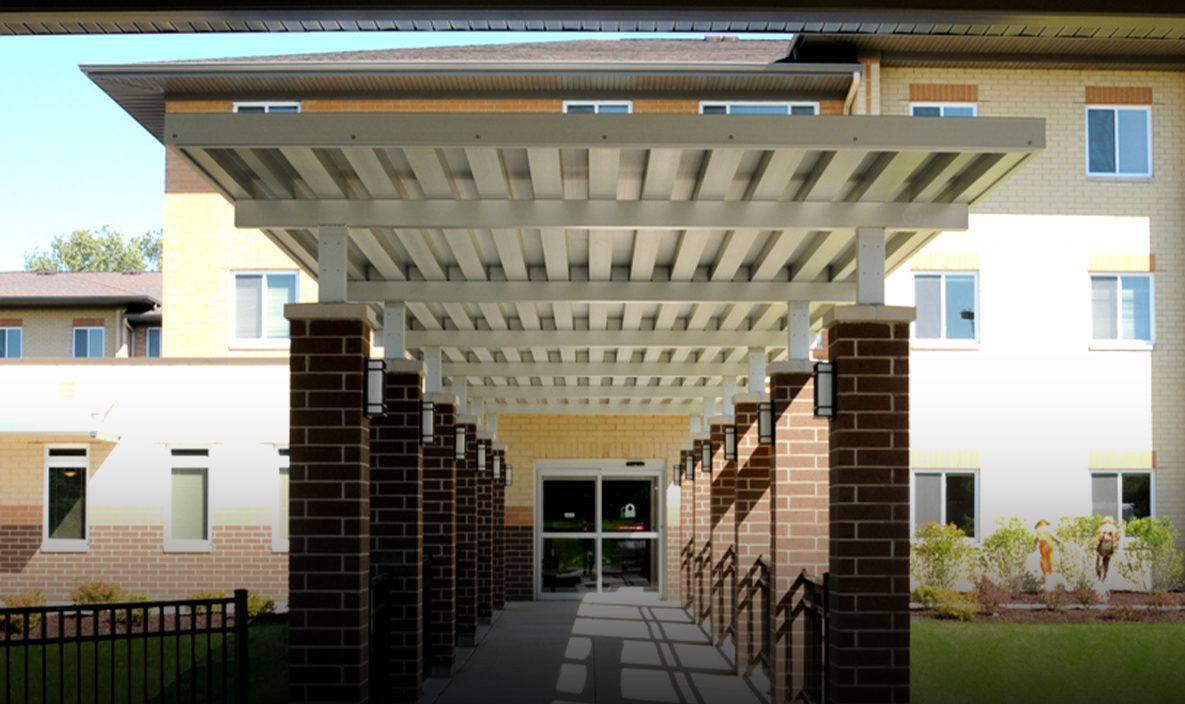
Paisano Green Community is the First Net-Zero Senior Housing Project in the US

Paisano-Green-Community-Senior-Housing-Workshop8-2

I thought this was an interesting article so I decided to share it with you all.

I  am a big advocate of environmentally conscious and efficient architecture, so I love seeing development in this area.  By utilizing highly efficient design these buildings are able to generate more power than they use from sunlight and wind.  I am excited to see these technologies applied and hope that developments like this one spark environmental interest in other developers.  As the technologies become more efficient, smaller and cost-effective we can hope to see more and more buildings incorporate "green" technologies.

For my next post I'll write a short bit on my most recent favorite book that relates to this subject "Cradle to Cradle: Remaking the way we make things" by William McDonough and Michael Braungart.

So keep checking back to the Tyson and Billy Blog for more exciting posts!

~Carl

Paisano-Green-Community-Senior-Housing-Workshop8-5 Paisano-Green-Community-Senior-Housing-Workshop8-6 Paisano-Green-Community-Senior-Housing-Workshop8-9 Paisano-Green-Community-Senior-Housing-Workshop8-10 Paisano-Green-Community-Senior-Housing-Workshop8-12 Paisano-Green-Community-Senior-Housing-Workshop8-lead-537x357

The article and photographs comes from inhabitat.com

Located near the border of Mexico in El Paso, TX, the Paisano Green Community is the first net-zero housing project for seniors in the nation. Designed by Boulder-based Workshop8, the senior housing project was funded through an ARRA Capital Fund Recovery Competition grant from HUD. In addition to the project's zero energy status, the green community is seeking LEED Platinum certification and is a certified Enterprise Green Community.

Paisano Green Community is a new typology for public housing and generates more energy than it uses. Solar photovoltaics on the roof and two wind turbines work to power the 73-unit facility and any excess is sold back onto the grid. Energy efficiency was a high priority in order to make the most of the on-site renewable energy generation. Each unit also features an air-source heat-pump water heaters. The buildings were partially prefabricated off-site as panelized sections and then assembled on site to ensure quality construction and minimize waste.

This infill development is located on the corner of Paisano and Boone and is bordered by the County Coliseum, the El Paso Zoo and the US Customs truck depot. In order to create a safe haven for the residents, Workshop8 arranged the buildings around a the edge of the site to create a strong perimeter and a safe central garden space. Residents enjoy views of the garden rather than views of the customs. All the buildings were optimized for solar passive deign with large overhangs to protect from overheating but still provide lots of natural daylighting. The project also provides space for a community building and commercial spaces like a grocery store, barber shop and office space. Residents have easy access to bus lines and surrounding shopping.


1Dec/110

Restaurant Design

Restaurant design is a challenge ~ not only does your food need to look as appealing as it tastes … but so does the interior.

It's been said we "eat with our eyes" and I believe we start doing this the moment our foot steps in the door.

LAVO

What am I eating ...  Is it pasta by the plate? Tapas for an hour? Gourmet because tonight's special? Casual because I'm too tired to cook for myself?

M.B. Post Restaurant

Whatever the occasion, the interior sets the stage for the meal we enjoy. We subconsciously project how the food will taste based on the environment it is presented in.

Here's a few of my favorite restaurant designs that have interiors as scrumptious as their menus … bon appétit!

Casually Inviting

M.B. Post Restaurant

1950s until the 1970s this space served as the  Manhattan Beach Post Office

M.B. Post Restaurant 

FORNOSTAR

Location Brussels in the Sainte-Catherine District
Type: restaurant & pizzeria

FORNOSTAR

Café Coutume

A coffee roastery in Paris

Café Coutume

Boutique Chic

Meltino Bar & Lounge


Concept: A coffee grain that draws the space… and the well-being associated with the simple act of drinking coffee.
A concept I can get behind!

Meltino Bar & Lounge

Twister Restaurant

The style: modern European
The food: molecular kitchen style dishes

The ceiling: a tornado top of course

Twister Restaurant

CHAMBERS eat + drink by

Restaurant and lounge at San Francisco’s iconic rock n’ roll hotel

These are records in the bookcases …

Image courtesy © Mr. Important Design
CHAMBERS

Modern Marvel

The Kith Café

Inspiration comes from the Japanese film, Be With You. Translating into “Would you care to have a coffee break with me sometime?”

Organic furniture construction using well over a 10,000 blocks of plywood!

The Kith Café

Nobu restaurant

The material: hand-woven curvilinear abaca panels

The effect: emulate traditional Middle Eastern vernacular architecture inspired by being submerged in a ocean wave.

Nobu restaurant

Divino Wine Bar

Location: Szent István Square, in the heart of Budapest’s city centre

The what: exclusive Hungarian, second generation wine & a dynamic bistro milieu

Divino Wine Bar

Tsujita restaurant

Inspired by clouds, this ceiling treatment was created using thousands of sticks  - 25,000 to be exact.

The effect? The mysterious image clouds create.

Tsujita restaurant

MYU restaurant

"Vaults" that separate the restaurant from the bar area are constructed from translucent stretch black fabric.

MYU restaurant

Simply Stunning

LAVO Italian Restaurant

Location: Las Vegas

LAVO

Next time you enter a restaurant, take notice of all the details ~ lighting, materials, texture ~ that create the backdrop for your dining experience.

~ Kelly

Images courtesy of the Retail Design Blog and AvroKO

28Sep/111

Art through Fire

I am stunned by this haunting art, by the setting, and the memories it seeks to preserve.

Street artist T-Radya creates poignant portraits of fallen Russian WWII soldiers displayed on the walls of an abandoned WWII hospital in Yekaterinburg, Russia.

Method: assembling bandages on wooden boards and then setting them on fire.

This portrait literally gives me chills. Somehow it is even more haunting that this face emerged from flame.

Finding the dead, to burn them back to life.

The location of this installation is in T-Radya's hometown.

A poignant pause before the molotov ignites the canvas.

And creates this …

And this …

And this …

I believe a true artist possesses the ability to see beyond the medium to what can be.

Wood frames, bandages, and flames manifesting in to a preservation of history by way of art.

"This war is not an ordinary war. It is the war of the entire Russian people. Not only to eliminate the danger hanging over our heads, but to aid all people groaning under the yoke of Fascism"
Josef Stalin - 22nd June 1941

* June 22, 1941 marked the beginning of Operation Barbarossa -  the code name for Germany's invasion of the Soviet Union.

~ Kelly

Sources
Images from T-Radya's Webite *which is not in English, but does show more of his work.
Additional Sources: Today and Tomorrow, Street Bones, WWII - Net, and Wikipedia.


29Aug/112

South African Serenity

Located in Umhlanga, South Africa this gorgeous glass-wall home was designed to center around family, entertaining friends, outdoors, and Eco-friendly living.

With views like these you can see why normal walls would just not do.

Outdoor landscaping complete with vertical garden walls.
Such cute kids!

What to do with all that openness?

Texture, texture, and more texture.

Layering textures keeps the room intimate without distracting from the soaring height of the room. Adding room curtains at the height of a normal ceiling gives a sense of placement to the bed and makes for a cozy feel.

Designer's Note: the neutral color palette is perfect for this space. Adding a punch of color would have taken away from the stunning vertical.

Simple and Luxurious.

The addition of the curtains behind the tub is casually elegant and keeps this space from feeling empty.

Designer's Note: If you  have a room that is feeling a little bland or needing a touch of warmth … see where you can hang a textile vertically. A easy way to bring coziness without the big cost.

A dual work and dining space opens into the kitchen.
Adjacent doors open to the terrace ~ a wonderful backdrop for family meals and dreaded homework time.

And lastly the Star of this Home: the Living Room

A showcase of texture, color and light this room has a lived in feel with a touch of elegance. The perfect balance for a busy family with a flair for entertaining.

Your geography lesson for today …

Umhlanga is a residential, commercial and resort town north of Durban on the coast of KwaZulu-Natal, South Africa.

Thanks Wikipedia!

It's Monday. There's a lot of things we could be … so Be Inspired!

~ Kelly

Visit House & Leisure for the full article and design credits.

16Aug/116

Successful Design Paradox: Industrial yet Inviting

The most difficult challenge as a commercial designer is capturing a sense of warmth in a commercial setting especially when the design aesthetic is industrial.

Today I'd like to take a page out of one of European Restaurant Design's best design examples: Mazzo

Taking Note ~ European Dining Culture

Mazzo on Rozengracht

The European dining experience is completely different than our American counterpart. In a café in Amsterdam you might find locals going to lunch and staying for dinner, or lingering over dinner well into the night.

In the US our experience is eating and leaving. And frankly, if you stay too long and mingle over a cleared table, your waitress might come back around and give you the polite shove of:
"Was there something else you were wanting to order?" Hint, hint. Leave!

Discovering Mazzo

Order a Espresso or a plate of Pasta

For this Italian restaurant set in the Jordaan district of Amsterdam, their motto is the antithesis of the above scenario and the embodiment of European dining:

Anyone, young and old, can come in from early morning until late at night … and stay, because we've designed this space for you to do so.

They achieve a design paradox of industrial yet inviting by introducing a "living room concept" to their space and a few smart tricks along the way:
Materials, Functional Display, Accommodating Families, and Portraits wall art.

Architectural Materials ~ Bringing Warmth to Steel

Welcoming Ambiance

To aid in achieving warmth a honest use of industrial materials results in a wonderful layering of texture.

Overall, the existing building's materials dictated the direction. Power floated concrete, chipped brickwork, and stone were the base, and the designers introduced only pine wood and raw steel to round out the palette of  five materials.

The warmth of brick and the soft pine wood are the perfect counterbalance to steel and concrete's cool.

Functional Display ~ Pantry Style Storage

Open Storage the Unifying Element


A design challenge for this space was the inherent lack of storage. The design team conquered this feat by incorporating wood cupboard storage for restaurant supplies and wares for sale.

This functional design lends itself to the utilitarian industrial look, but also serves dual purpose in achieving a familial sense of home while the staff roots through "the panty" for just the right spice to garnish your meal.

Accommodating the Family ~ The Living Room Concept

Children's Play Area


The living room concept is evident in their dual function spaces. A section of the dining area shares the same space as a children's play area with chalkboard walls and pine cubbies full of toys.

The coldness of industrial design melts away with tot sized tables and toys, and is just the right combination to keep the children busy -  allowing mom and dad to relax, stay, and enjoy.

Portraits of Life ~ Illustrate Your Enjoyment

Italian Family Dinner


The most successful bridge between industrial and warmth is the inclusion of these oversized canvas portraits of four different people of varied age groups enjoying Italian food.

We rarely find actual portrait images in commercial spaces, and it is such a shame as these portraits capture a sense of community and belonging.

The black and white images still lend themselves to the industrial feel, but offer that connection of people and food - further branding this restaurant as good food to be enjoyed by all ages.

Also note the bright red fire hose is incorporated and emphasized in the overall design by the red table linens. So smart.

Light Fixture Love


Dear Ingo

As promised on our Facebook page yesterday … the light fixture!

Moooiis one of my all time favorite lighting fixture companies. They have a plethora of other design products, but their lighting is A-MAZ-ING.

Restaurant Design Today

Design by Concrete

The Restaurant Design Industry is facing a new challenge today as patrons and owners alike want the feel of a family-style dining but still maintain the modern and utilitarian efficiency of a commercial restaurant.

To rise to this challenge, I think we should be looking to the masters of European Design who have been successfully achieving this for years.
Stay and dine for 2 to 6 hours, bring your kids, host a meeting … but enjoy your dining experience.

Cheers to good and successful industrial design.
~ Kelly

Sources for today's post:

Design firm for Mazzo: Concrete

To learn more about Mazzo's design visit: Contract Design